We built this to solve a specific problem
Most music production courses give you theory and then leave you hanging when it's time to actually make something.
We started Prylanthem in 2019 because we kept seeing talented people struggle not with understanding concepts, but with applying them under real conditions.
Our workshops put you directly into production scenarios where you learn by doing, not by watching someone else do it.

Why we focus on practical application
When I started producing ten years ago, I spent months watching tutorials and reading manuals. I could explain compression ratios and EQ curves, but my tracks still sounded amateur because knowing what a tool does is completely different from knowing when and how to use it in context.
That gap between theoretical knowledge and practical skill is where most people get stuck. You understand the concepts but freeze when staring at a blank project. Our workshops are designed specifically to close that gap by putting you in realistic production situations from day one.
Every exercise we create comes from actual production challenges we've encountered or seen students struggle with repeatedly. You're not learning isolated techniques—you're developing the decision-making process that separates someone who knows the tools from someone who can actually finish tracks.
We've refined this approach with over 4,000 students across 67 countries since 2019, continuously adjusting based on where people actually get stuck versus where they think they'll struggle.
How our workshop structure actually works
Situation-based learning
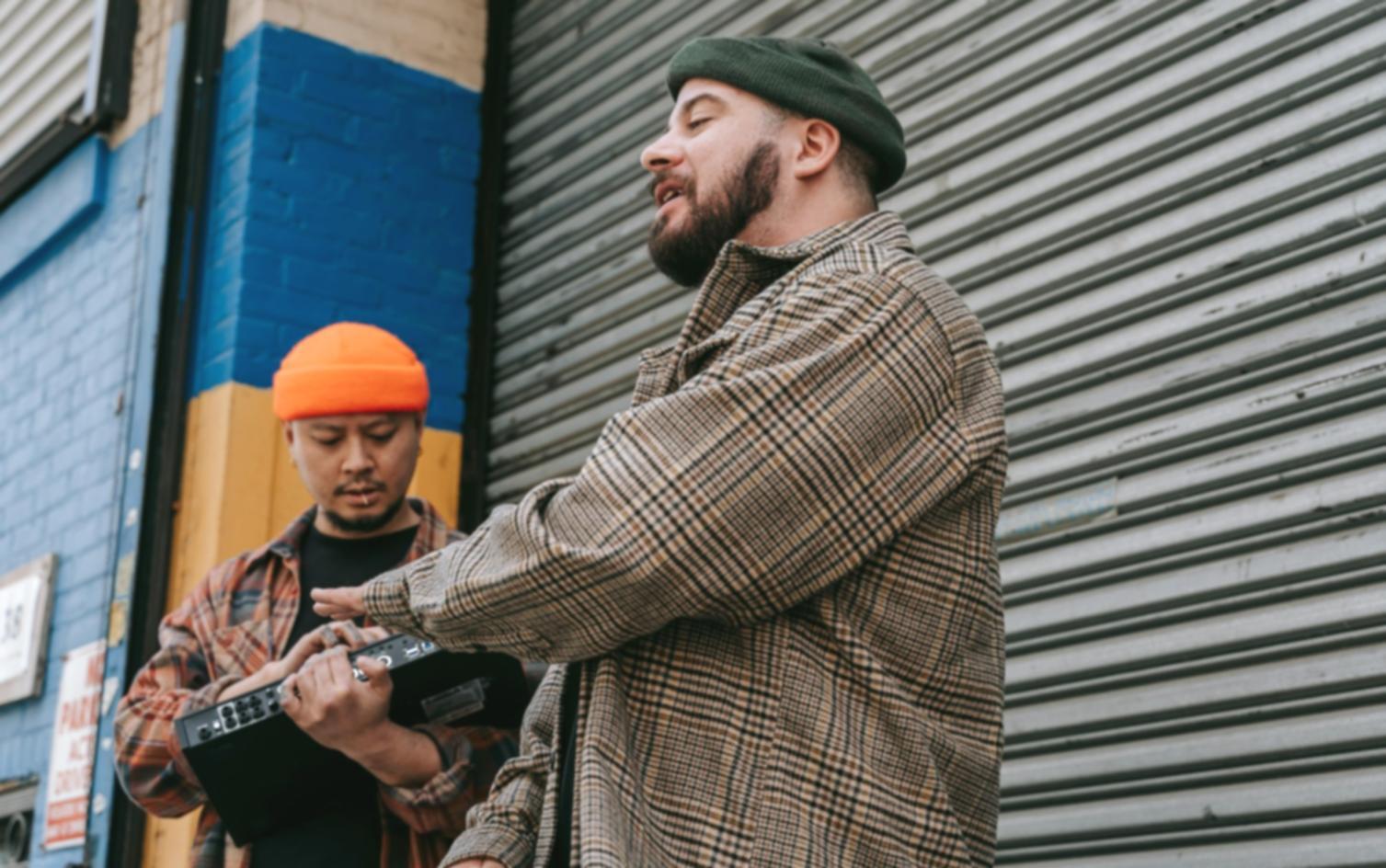
Each workshop presents specific production scenarios—mixing a dense arrangement, designing bass sounds that cut through, or salvaging poorly recorded vocals. You work through these situations step by step, making the same decisions professional producers face daily.
Immediate application
No passive watching. Within the first fifteen minutes of any workshop, you're actively working with provided project files or recording your own material. We give you the stems, reference tracks, and starting points—then you make decisions and hear the results.
Feedback loops
Submit your work and get specific technical feedback on what's working and what needs adjustment. Not vague encouragement—concrete observations about frequency balance, dynamic processing, arrangement clarity, and other measurable aspects of your production.
Progressive complexity
Workshops build on each other deliberately. You start with fundamental decisions—gain staging, basic EQ moves, simple compression—then gradually introduce more variables as your ear develops and your workflow becomes more automatic.
Collaborative problem-solving
Access to community forums where you can hear how other students approached the same assignment differently. Seeing multiple solutions to identical problems accelerates your understanding of available options and when different techniques make sense.
Realistic timelines
Most workshops are designed to be completed in 2-4 weeks at your own pace. We're not promising mastery in a weekend—we're giving you structured practice that builds actual capability over time. Some students move faster, others take longer, both are fine.
Who builds these workshops
Kaisa Virtanen
Spent six years producing electronic music professionally before realizing I was better at teaching production methodology than making tracks myself. Now I design workshop exercises that force students to make the same difficult decisions I had to figure out the hard way, just with better guidance.
Petra Novotná
My audio engineering degree taught me signal flow and acoustics but not how to actually make creative decisions under pressure. I spent three years working in post-production before joining Prylanthem to help students develop both technical precision and confident intuition in their production work.
What guides our approach
These aren't aspirational values we put on a wall—they're specific principles that shape how we design workshops, structure feedback, and measure whether students are actually progressing or just completing assignments.
Skill over credentials
We don't issue certificates that claim you're now a "certified audio engineer" after completing three workshops. What matters is whether you can actually mix a track that translates across different playback systems, not whether you have a badge to display.
Our focus is building demonstrable capability—the kind you prove by uploading work that sounds professional, not by listing course completions on your resume. If the skill is real, opportunities follow naturally without needing validation from us.

Honest feedback
When you submit work, you get specific technical observations about what's happening in your mix—not encouragement about your "journey" or potential. If your low end is muddy, we'll tell you it's muddy and explain why, not soften it with positive framing.
This approach isn't about being harsh—it's about giving you the same kind of direct feedback you'd get from an experienced engineer in a professional setting. Vague praise doesn't help you improve; specific problems you can address do.
Real constraints
Professional production always involves limitations—deadlines, less-than-perfect source material, client revisions, technical restrictions. Our workshops deliberately include these constraints because learning to work within them is a core production skill.
You'll work with time limits, fixed plugin selections, imperfect recordings, and specific technical requirements. These aren't arbitrary restrictions—they mirror the actual conditions under which most production work happens, preparing you for reality rather than ideal circumstances.